

How LA County Fire improved the performance, reliability and flexibility of their Fire Station Alerting System with modern technology
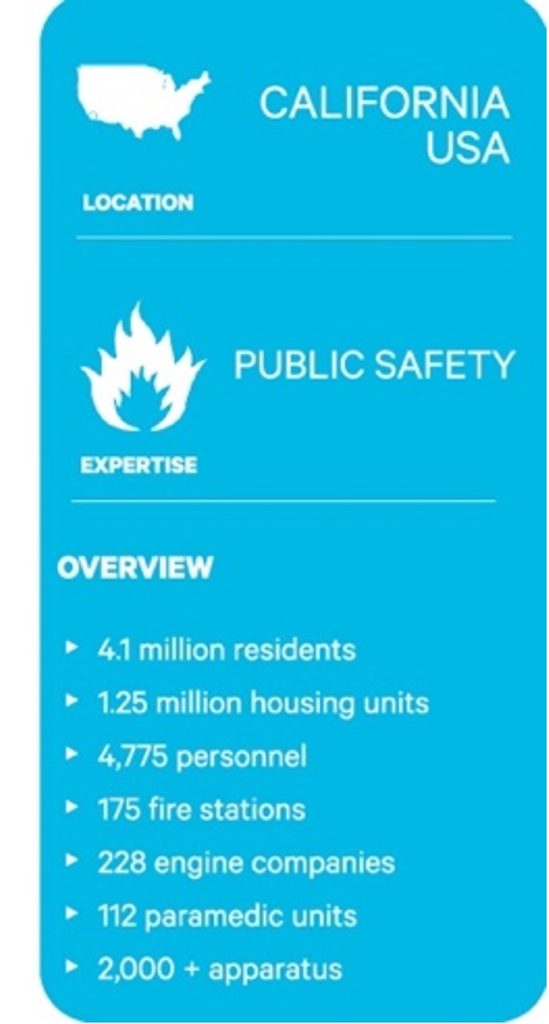
The County of Los Angeles Fire Department (LACoFD) provides fire protection and life safety services to more than 4 million residents of Los Angeles County, California across 2,300 square miles and 59 cities. With nearly 400,000 annual incidents and almost 200 fire stations, the Department relies heavily on its Fire Station Alerting System (FSAS) to accelerate response times and ensure mission‑critical communication.
The Need:
Legacy FSAS Limitations and Operational Bottlenecks
The legacy FSAS was a proprietary, hardware‑heavy system built around relays, batteries, inverters, and a commercial PA system. Dispatch alerts were transmitted via two‑tone radio signals that triggered lights, tones, and eventually opened the speaker for voice dispatch. While functional, the system lacked customization, scalability, and speed. Paging tones transmitted over radio created delays—especially when multiple stations needed simultaneous alerting.
LACoFD needed a modern FSAS capable of:
- Instant, simultaneous alerting across multiple stations
- Station‑level customization for tones, lights, and apparatus‑specific notifications
- Shorter response times through streamlined alert workflows
- Future‑ready architecture that could evolve with new technologies
The Solution:
FSAS Modernization Through RMI’s IQ FSAS
To modernize their FSAS, the Department turned to RadioMobile, Inc. (RMI) as their trusted technology partner. RMI had recently completed a successful deployment of a new mobile data Automatic Vehicle Location (AVL) system for the Department’s 1,300 emergency vehicles. Building on that success, RMI collaborated closely with operations personnel to design, test and deliver a fully customizable IQ Fire Station Alerting System (FSAS).
“We built the system around their exact operational needs, and as new requests surfaced, we integrated those too. It was a genuinely collaborative process,” says Jim Moore, CEO of RMI.
The Result:
Faster Turnout, Smarter Alerting, and Improved Operational Efficiency
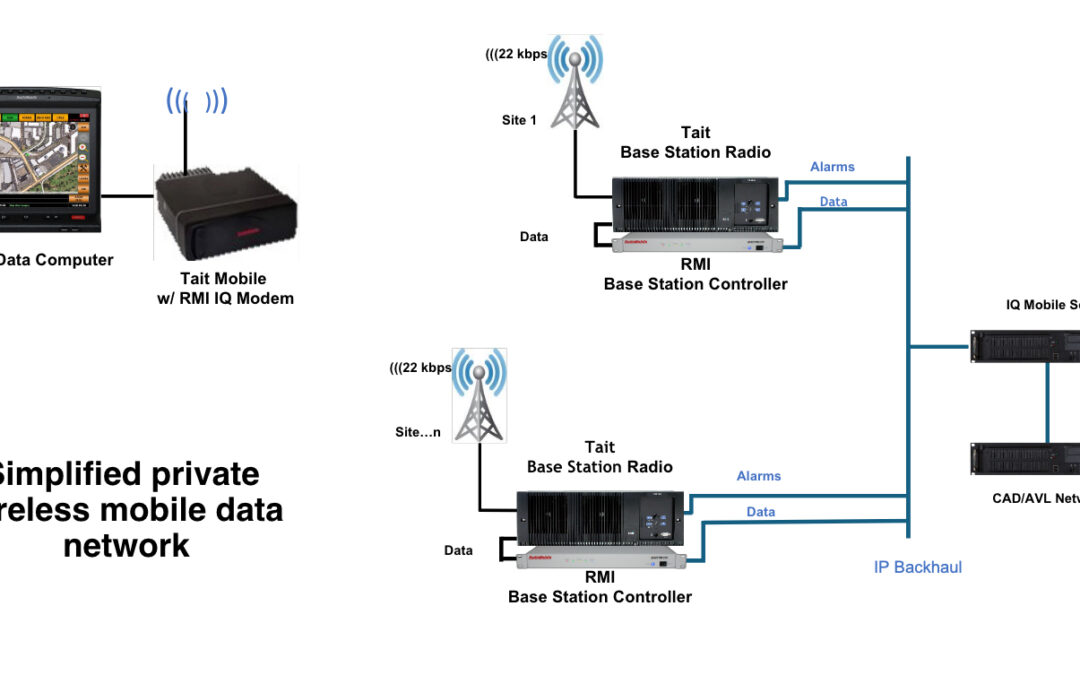
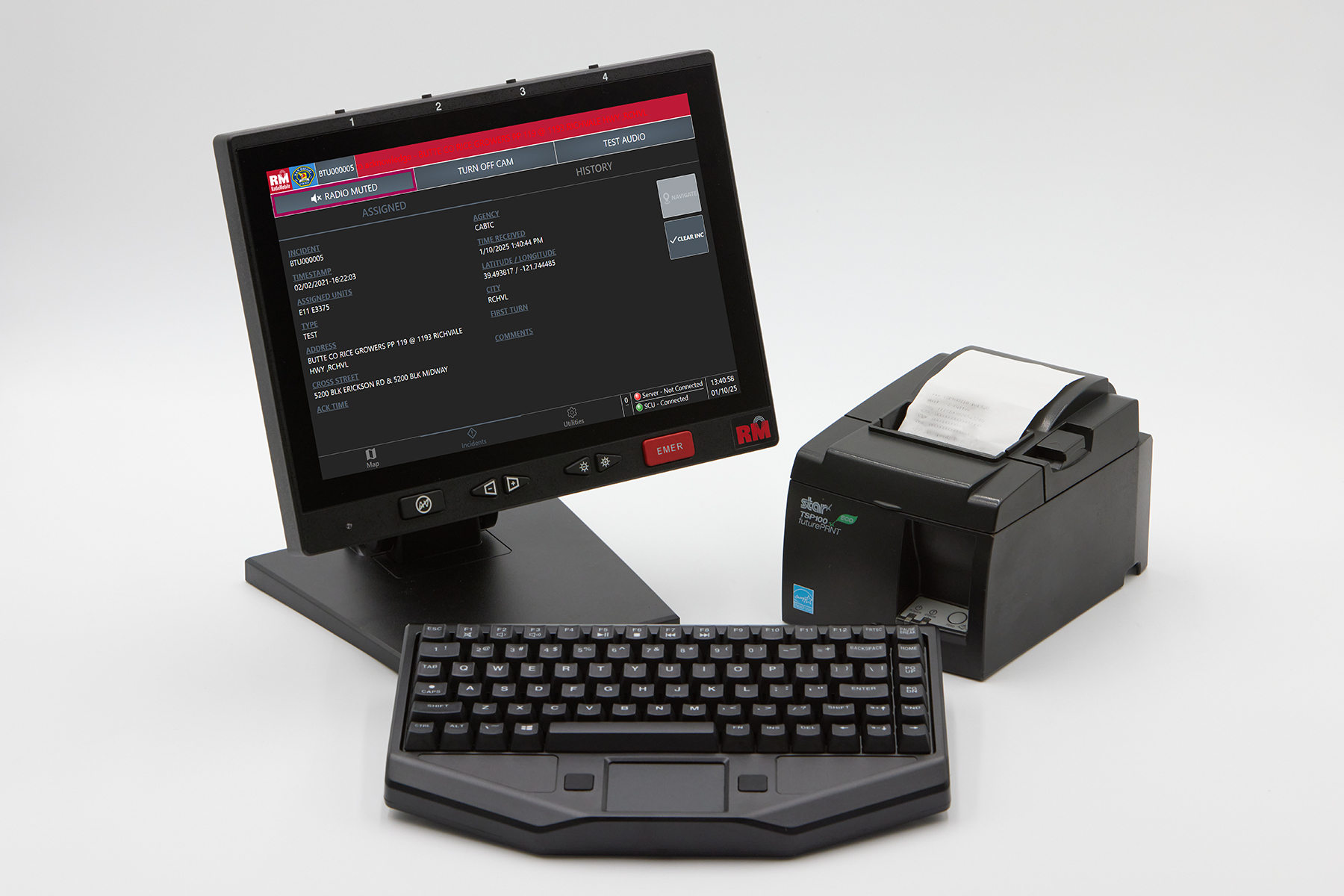
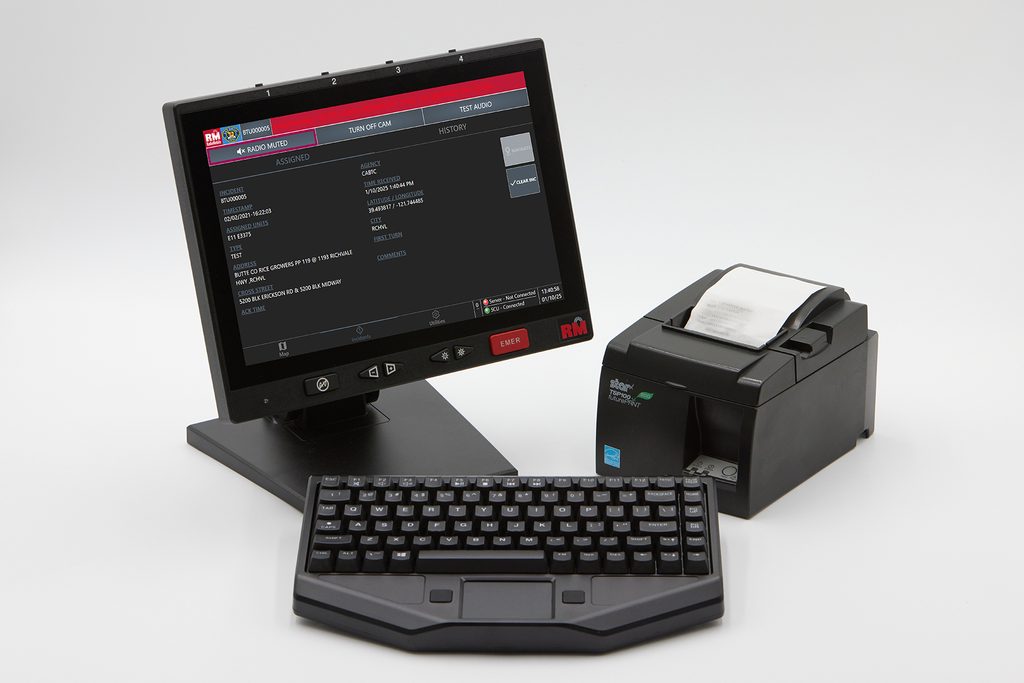
The resulting FSAS uses modern data communications to improve response times and deliver station‑specific customization. When the Computer Aided Dispatch (CAD) system sends an alert, IQ FSAS instantly converts it into a data signal and routes it through the county’s Land Mobile Radio (LMR)‑based data network. RMI’s Station Control Unit (SCU), paired with the MDC‑based Command Desk Terminal (CDT), initiates the configured alert sequence for each station.
The system’s alerting capabilities include escalating tones, targeted lighting, and text‑to‑voice dispatch containing incident type, responding units, and critical details. The radio voice channel opens automatically for ongoing communication. Apparatus equipped with RMI’s IQ SCU Software receive the dispatch simultaneously, ensuring crews have the information they need as they leave the station.
Key Features of IQ FSAS
- Fully programmable lights and tones tailored to station needs and incident types
- Apparatus‑specific alerting (engine, truck, battalion chief, medic unit, specialty apparatus)
- Dorm‑room‑specific notifications so only required responders are alerted
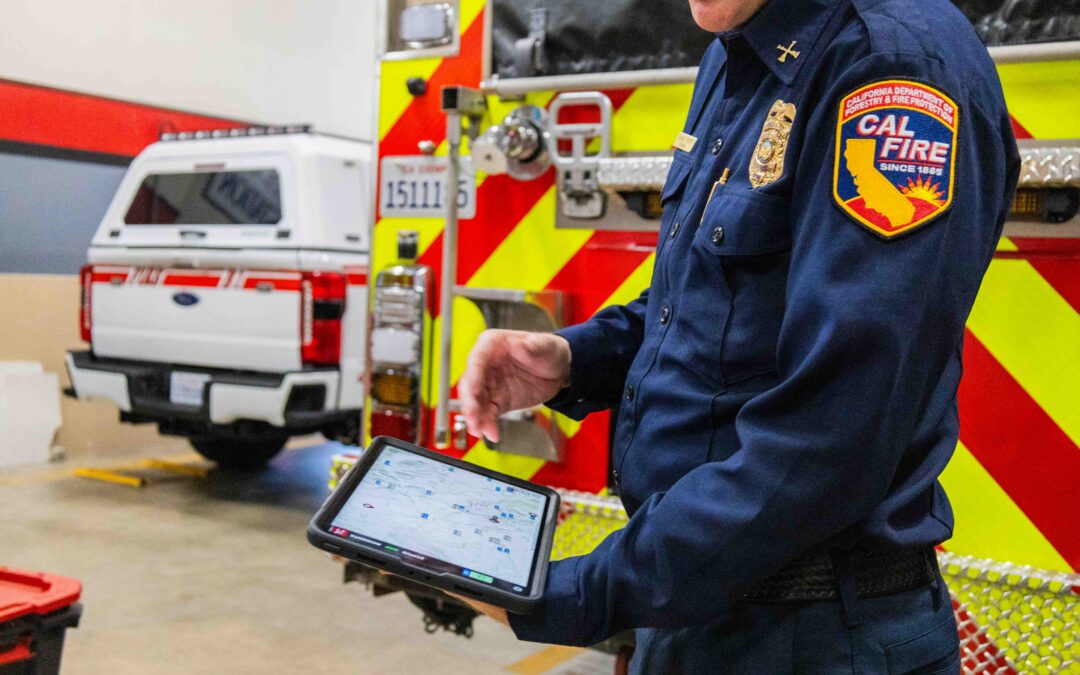
- Integrated dispatch details displayed on station and apparatus MDCs
- Text‑to‑speech alerting for clear voice delivery of dispatch information
- IP alerting to support network‑based alert delivery and system expansion
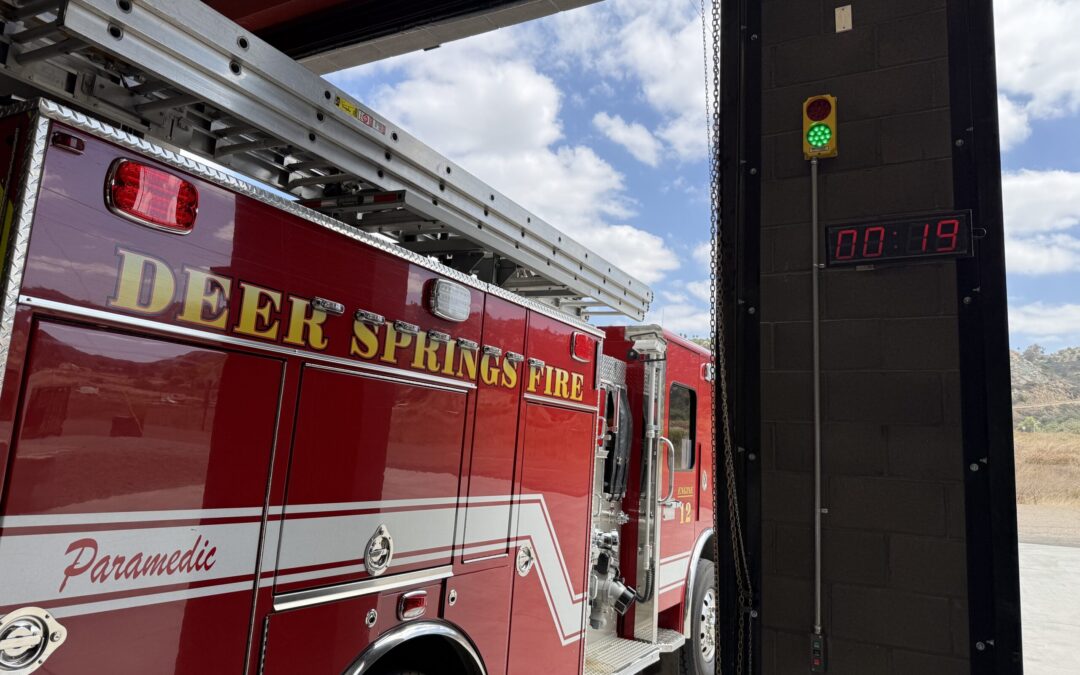
- Automated bay door operation to help streamline apparatus departure
- Remote vehicle starting to prepare apparatus before crews enter the bay
- Automatic shutoff for kitchen gas appliances to improve station safety during emergency response
- Rip‑and‑run printer output with first directional turns to provide crews with quick printed routing guidance“Responders no longer waste time deciphering screens,” says Moore. “IQ FSAS delivers instant clarity, cuts valuable seconds off turnout, and makes station operations more efficient.”
Future‑Readiness:
A Platform Built for Expansion and Emerging Technologies
IQ FSAS is built on a modern, modular architecture that allows LACoFD to adopt new capabilities as they become available. The platform supports rapid over‑the‑air software updates across multiple stations, enabling faster deployment of enhancements and bug fixes without manual intervention. RMI continues working with the customer to integrate additional peripheral devices and finalize installation of SCU 2.0 systems, ensuring the platform remains ready for future operational expansion.
“Every project we have done with RadioMobile has been a total win,” explains Scott England, LACoFD’s telecommunications systems consulting engineer. “Their products are great, and the support is top notch.”
The Results:
Faster Turnout and Improved Response Efficiency
IQ FSAS has improved overall response efficiency by reducing the time between dispatch initiation and crew mobilization. Instead of relying on slower, sequential tone-based alerting, the system delivers data-driven alerts simultaneously to the appropriate station, apparatus, and personnel. Crews receive clearer incident information faster, including incident type, responding units, and critical dispatch details, helping them dress out, gather the right equipment, move to the correct apparatus, and leave the station with greater confidence and less delay.
Says Moore, “The right crews get up, grab the right equipment, and roll out faster than ever.”