

Leading Statewide Situational Awareness for Firefighters
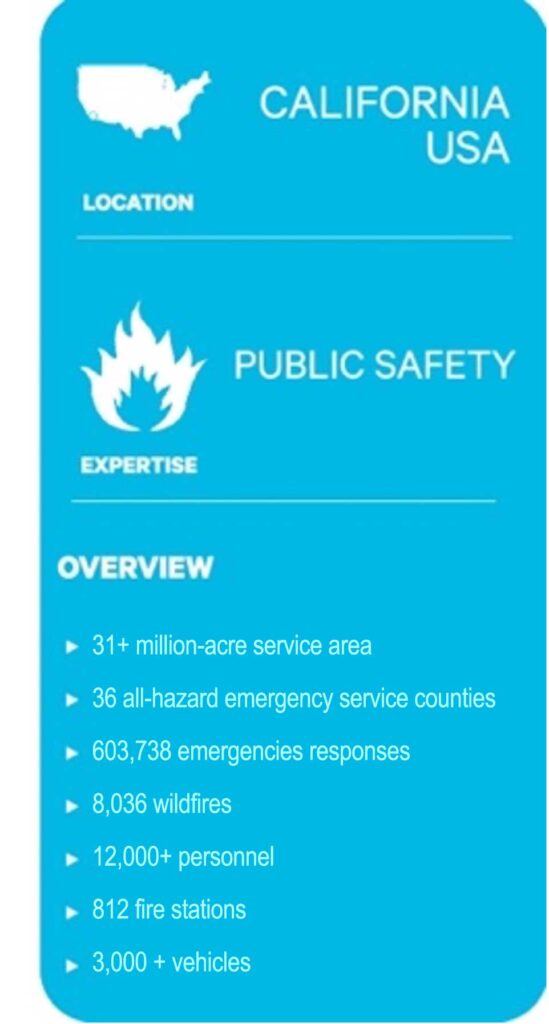
The California Department of Forestry and Fire Protection (CAL FIRE) protects more than 31 million acres of wildland across the state and provides all-hazard emergency services in 36 counties. With 812 stations organized into 21 administrative units—each with unique CAD environments and connectivity challenges—CAL FIRE needed a modernization path that could unify communications and maintain continuous situational awareness statewide.
The Need:
Statewide Connectivity and Location Accuracy for Emergency Response
California’s terrain and scale create extreme variability in connectivity, from dense urban centers with robust 5G coverage to remote mountain regions where cellular signals can disappear. CAL FIRE needed a solution that could support resilient fleet communications while delivering reliable vehicle location data across its entire service area.
CAL FIRE’s modernization effort was guided by two priorities:
- Create seamless, resilient connectivity for the entire fleet,
- Equip every vehicle with AVL technology that performs reliably across all 31 million acres of CAL FIRE’s service area.
CAL FIRE sought a flexible, scalable solution that could evolve with emerging technologies and integrate with third-party software ecosystems. The solution needed to:
- Integrate with diverse software environments and platforms (video streaming, cameras, personnel, etc.)
- Maintain connectivity across multiple cellular, satellite, and evolving wireless technologies
- Scale with emerging software ecosystems
- Improve dispatch efficiency, accountability, and responder safety
The Solution:
RMI AVL Modernization
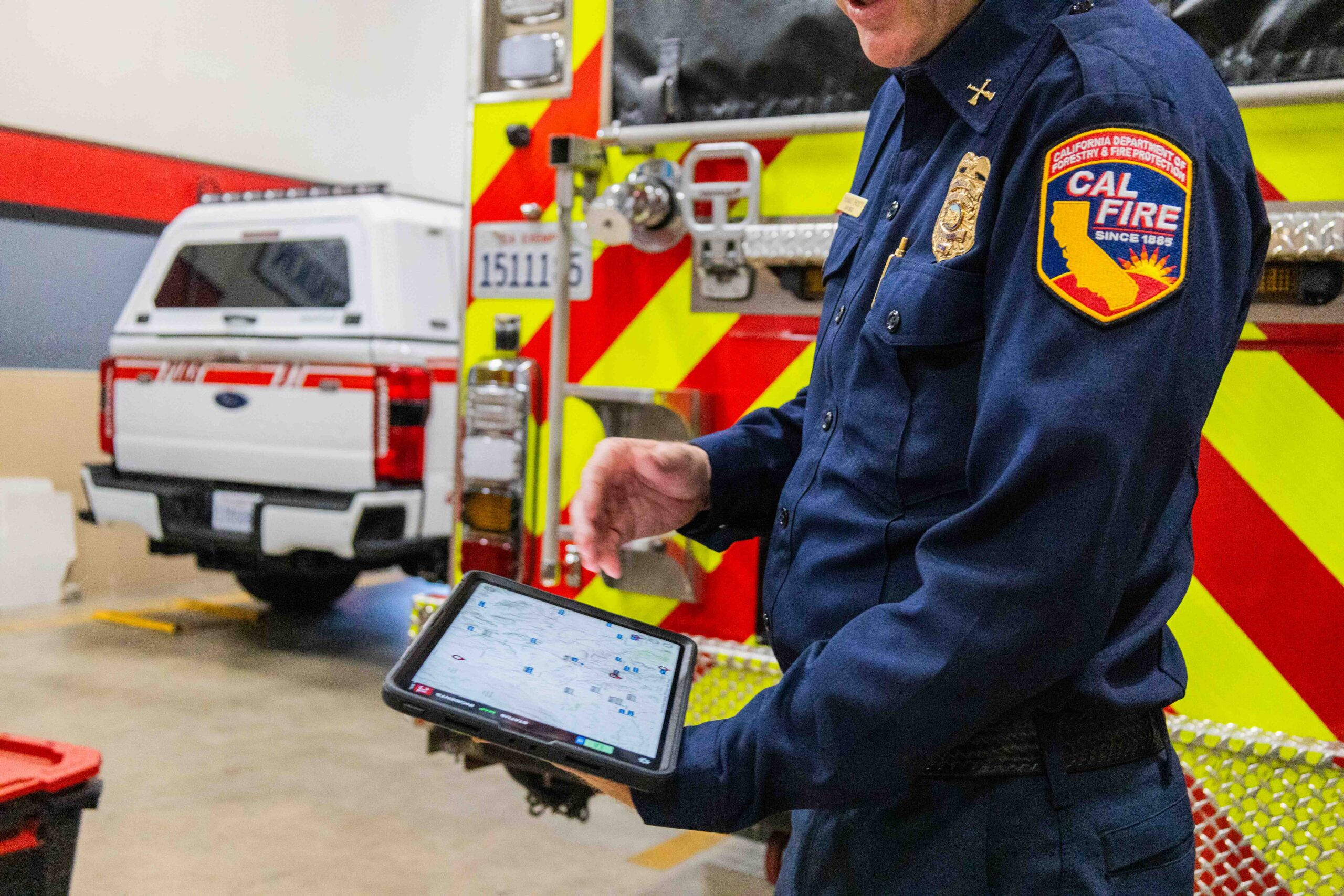
Building on the success of its earlier AVL implementation, CAL FIRE again partnered with RadioMobile, Inc. (RMI) to deploy a next-generation AVL configuration. The modernized environment supports Apple iPads running third-party operational software integrated with RMI’s AVL Connectivity Platform (ACP).
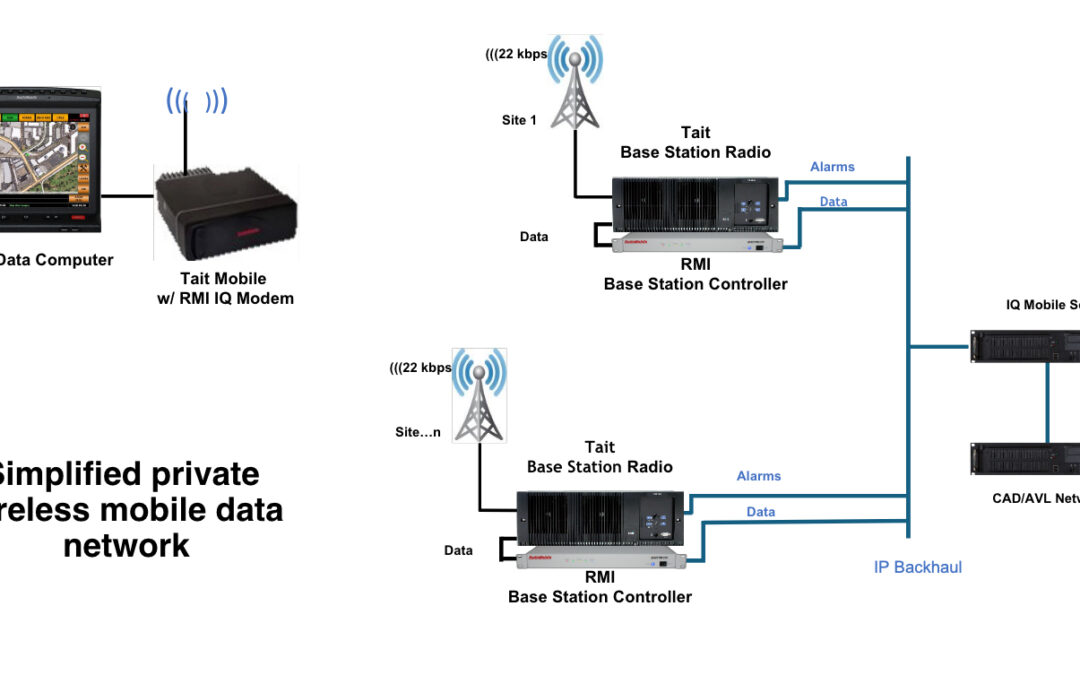
Each apparatus now operates on a high-availability, multipath connectivity architecture that combines multi-carrier LTE/5G and satellite communications. This design helps maintain uninterrupted data flow between field units and dispatch centers.
In CAL FIRE’s configuration, all three connections remain active simultaneously and are bonded through channel aggregation to deliver the best available connectivity and the highest practical bandwidth across available links.
Key Features
The modernized RMI AVL solution brings together hardware, software integration, and resilient connectivity to support daily operations and large-scale incident response.
The new, modernized RMI AVL solution includes:
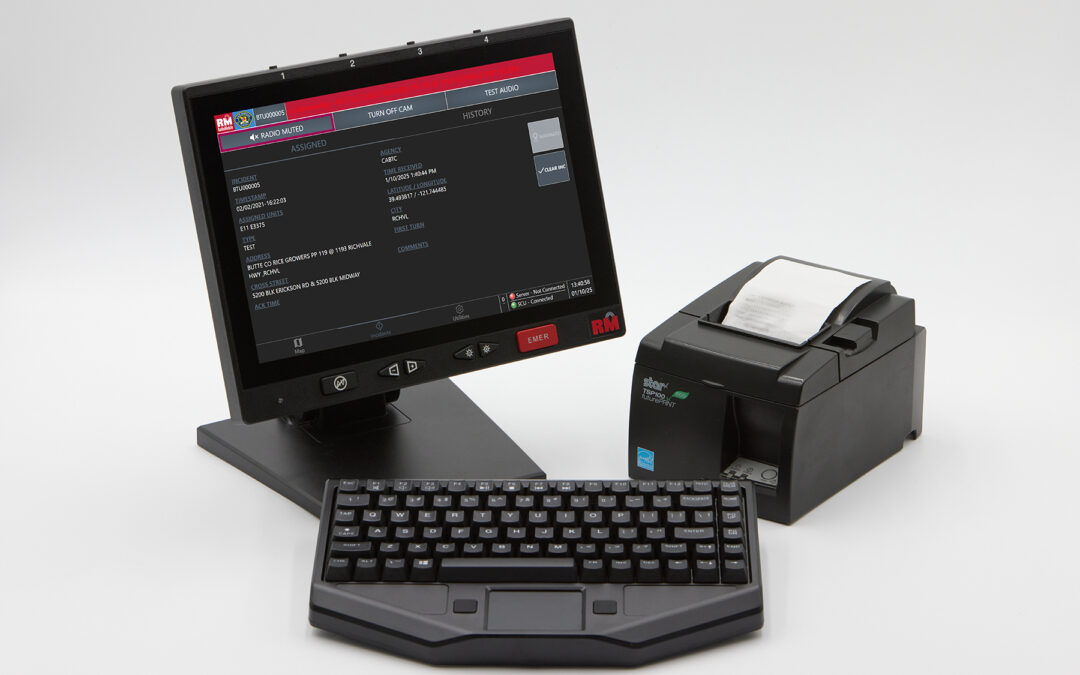
- iPad-based interface with intuitive touch navigation and simplified updates via mobile device management (MDM).
- Third-party software integration for CAD, mapping, and incident tracking.
- Unified situational awareness across all 21 administrative units.
- Ability to participate in mutual aid across a common operating picture
- Reliable, versatile, and persistent connectivity ensuring mission critical uptime and redundancy.
- Enhancing iPad operation in harsh environments by supporting reliable power, ventilation, mounting, and data connectivity in apparatus exposed to heat, vibration, dust, and extended field operations.
Hybrid 4G/5GLEO satellite communications with channel aggregated LTE/5G and satellite paths, enabling real-time streaming video, resilient data throughput, and intelligent network failover managed by RMI’s AVL Connectivity Platform.
Overcoming Deployment Challenges
Transitioning from ruggedized mobile data computers to tablet-based devices required practical engineering for the realities of emergency response. RMI designed vehicle-mounted charging and connectivity solutions that maintain power and data integrity in the field—an important requirement for rural stations, mobile operations, and apparatus operating in harsh conditions.
Purpose-Built Hardware Enhancements
To ensure the tablet-based approach could perform reliably in the same demanding environments as CAL FIRE’s apparatus, RMI worked with CAL FIRE fleet operations to optimize and ruggedize in-vehicle components for extreme heat, vibration, dust, and extended field use. To support statewide deployment, RMI added:
- A vehicle-mounted iPad mounting and ventilation system to maintain performance during high heat operations such as wildland fire conditions
- An AVL Connectivity Platform engineered for seamless transitions between LTE/5G and satellite networks, while providing intelligent power management and a unified maintenance platform.
These enhancements ensure stable operation even in remote, high temperature, or vibration heavy environments.
CAL FIRE is also advancing beyond traditional LMR communications by adopting a hybrid model that incorporates low-earth-orbit (LEO) satellite networks for persistent coverage in remote regions. This evolution enables continuous data flow for mission critical applications such as real-time streaming video from field units, giving command staff immediate visual intelligence during fastmoving incidents.
The system’s ability to aggregate multiple LTE/5G carriers and satellite paths to maximize throughput, ensuring video, telemetry, and AVL data remain stable even under heavy network load. At the center of this architecture is RMI’s AVL Connectivity Platform, ACP, a purpose-built connectivity module that intelligently manages network selection, aggregation, and failover—delivering a seamless, resilient communications backbone for CAL FIRE’s frontline operations.
Working with CAL FIRE fleet operations, RMI optimized and ruggedized the components within each apparatus to withstand harsh operating environments, supporting 12–20 installations per day and a significantly shortened deployment schedule that was embraced by the agency.
Results:
Improved Dispatch Efficiency, Accountability, and Responder Safety
CAL FIRE’s RMI AVL deployment has transformed CAL FIRE’s operational workflow and strengthened statewide situational awareness, providing the visibility and reliability crews depend on, while also delivering a new level of accountability on every fire scene.
By the end of the project, RMI’s AVL solution will be installed in more than 4,000 vehicles, including frontline, command, support, and administrative units.
CAL FIRE’s AVL modernization demonstrates how purpose-built technology, commercial hardware, and resilient connectivity can deliver public safety grade reliability for first responders. With high availability connectivity, multipath redundancy, and third-party software flexibility, the system positions CAL FIRE at the forefront of operational intelligence for emergency response.
Looking Ahead:
Interoperability and Future-Ready Public Safety Technology
CAL FIRE’s modernization journey continues with new interoperability initiatives that will allow fire personnel to communicate seamlessly with outside agencies during major incidents. The RMI AVL foundation ensures that as technology evolves, CAL FIRE remains ready—connected, informed, and equipped to protect California’s communities and beyond.
RMI’s commitment to CAL FIRE goes beyond delivering AVL technology; it is rooted in listening to the agency’s evolving needs, understanding the realities crews face in the field, and designing creative solutions to solve real-world operational challenges. As CAL FIRE’s mission and technology requirements continue to evolve, RMI remains focused on supporting its AVL needs today and into the future with reliable systems, responsive service, and practical innovation built around the way first responders work.