AUTOMATIC VEHICLE LOCATION
IQ AVL
Always Connected. Always Operational.
The in-vehicle connectivity platform that keeps crews informed from alert to arrival.
IQ AVL is a real‑time vehicle visibility and communications platform that delivers CAD and incident management data directly to the apparatus with the speed, accuracy, and reliability your crews depend on. It adapts to your agency’s needs, strengthening safety, improving coordination, and supporting faster, more confident response.
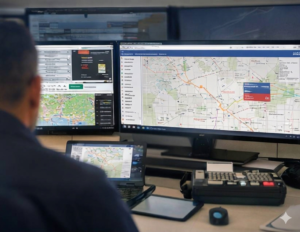
Transparent Operations
Continuous visibility from dispatch to on scene.
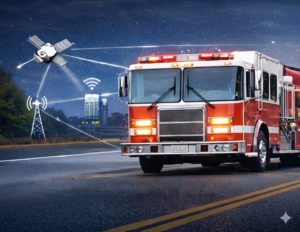
Resilient Connectivity
Multi-carrier + satellite coverage in any environment.
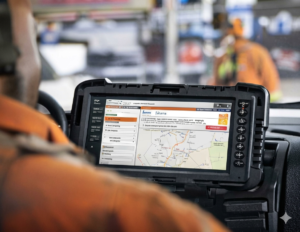
Real-Time Accountability
Ensure crews receive calls and updates without delay.
Key Benefits
- Persistent Connectivity — Multi‑carrier + satellite coverage keeps crews online when conditions are at their worst.
- Real‑Time Visibility — Every unit stays traceable, every status updates immediately, every second accounted for.
- Stronger Crew Safety — Reliable data flow ensures responders never operate in the dark.
- Seamless Software Integration — Works effortlessly with IQ Mobile, Tablet Command, and existing agency systems.
- Device Reliability in the Field — Rugged MDCs and iPads stay powered, cooled, and connected through the entire incident.
- Operational Confidence — Stable, uninterrupted communication from dispatch to arrival builds trust across the entire response chain.
System Features
IQ AVL is a connectivity‑first, real‑time vehicle visibility platform that unifies CAD data, communication networks, and in‑vehicle devices into one seamless operational picture. Explore some of the key features of IQ AVL below.
Reliable connectivity is the foundation of any AVL system. IQ AVL delivers a multi‑layered, field‑proven connectivity stack designed to perform in urban, rural, and remote environments. The IQ AVL connectivity platform implements intelligent channel aggregation, enabling multiple networks to operate as a single, unified connection.
Architecture Highlights
- Multi‑carrier cellular (multiple modem/multiple SIMs)
- Starlink® satellite connectivity with pooled data plans
- Ruggedized in‑vehicle routers (Ericsson Cradlepoint, Semtech/SierraWireless, Peplink)
- Exterior antennas (Parsec, Airgain, Taoglas)
- Securely mounted, actively cooled MCTs with integrated power management
- Local public/private Wi‑Fi bubble for connected devices
Performance Benefits
- Seamless failover between cellular and satellite networks
- Bandwidth aggregation for high‑demand applications
- Real‑time traffic optimization
- Satellite data pooling for cost efficiency
With connectivity established, IQ AVL powers the devices that make information actionable during response.
Supported Configurations
- iPads supporting platforms like Tablet Command software
- Ruggedized Windows MDCs running IQ Mobile software
- Multi‑device configurations to support command, navigation and situational awareness
- Optional MDC‑iPad interoperability
- Built for operational realities
- Reliable in‑vehicle power and secure mounting
- Passive and active cooling that prevents overheating and ensures continuous device performance in extreme environmental conditions
- Programmable power management
- Wired/wireless connectivity to routers or satellite terminals
- Always‑on connection through the AVL platform
IQ AVL integrates seamlessly with leading incident management and AVL platforms including RadioMobile’s IQ Mobile Software, Tablet Command and other third party applications — and supports any existing agency software.
IQ AVL enables:
- AVL reporting and enhanced situational awareness
- Continuous CAD and AVL communication workflows
- Stable sessions across changing network conditions
- Flexible software choices without sacrificing reliability
Benefits:
Agencies maintain flexibility in their software choices, while IQ AVL provides the confidence that those systems perform reliably under real-world conditions.
Key Components
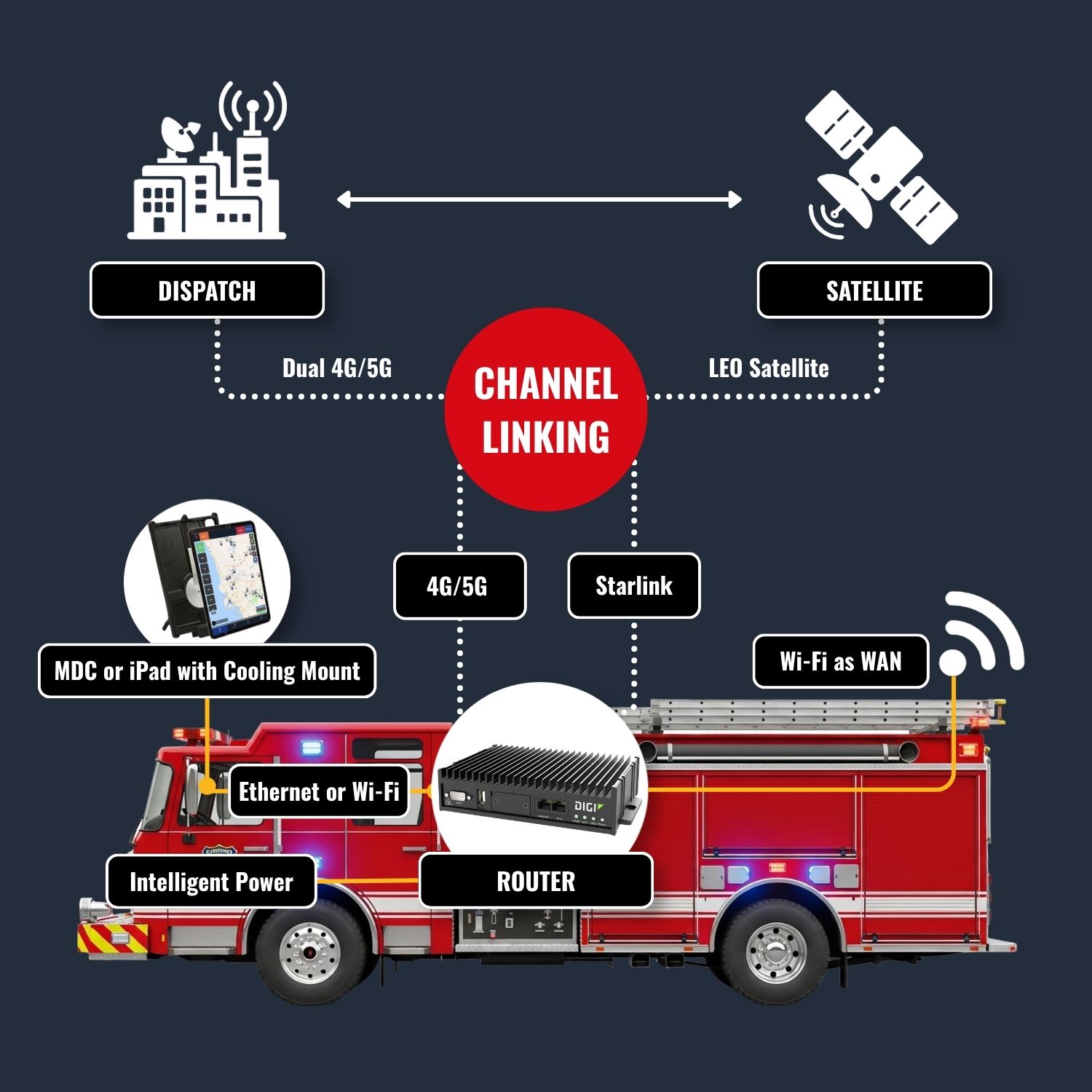
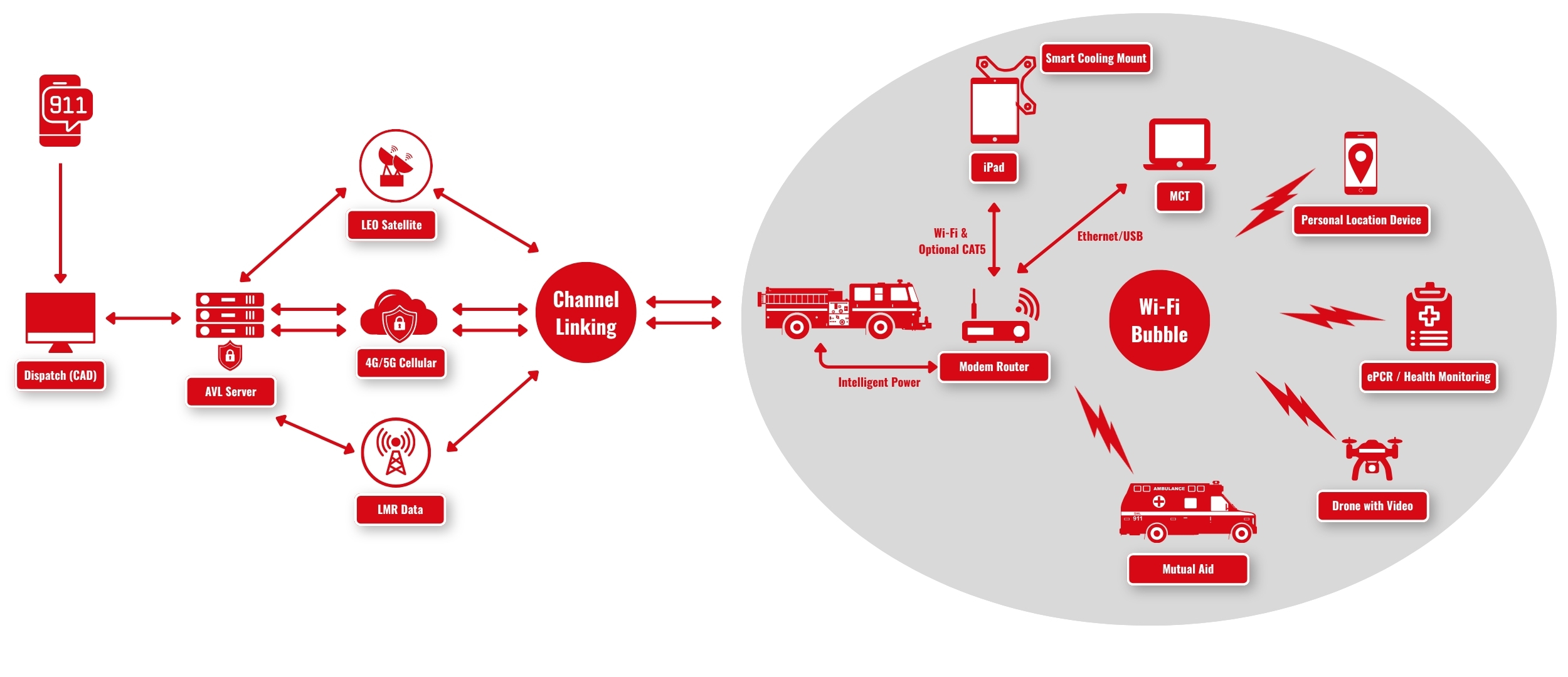
The diagram below illustrates the IQ AVL connectivity stack, linking the dispatch center (CAD/911) to the vehicle’s communication hub through multiple networks – LMR, LTE and LEO Satellite. Channel linking blends these paths into one persistent, reliable connection that keeps data flowing and everyone accounted for everywhere your crews operate.
IQ AVL Connectivity Stack Diagram
Mobile Computing Terminal (MCT)
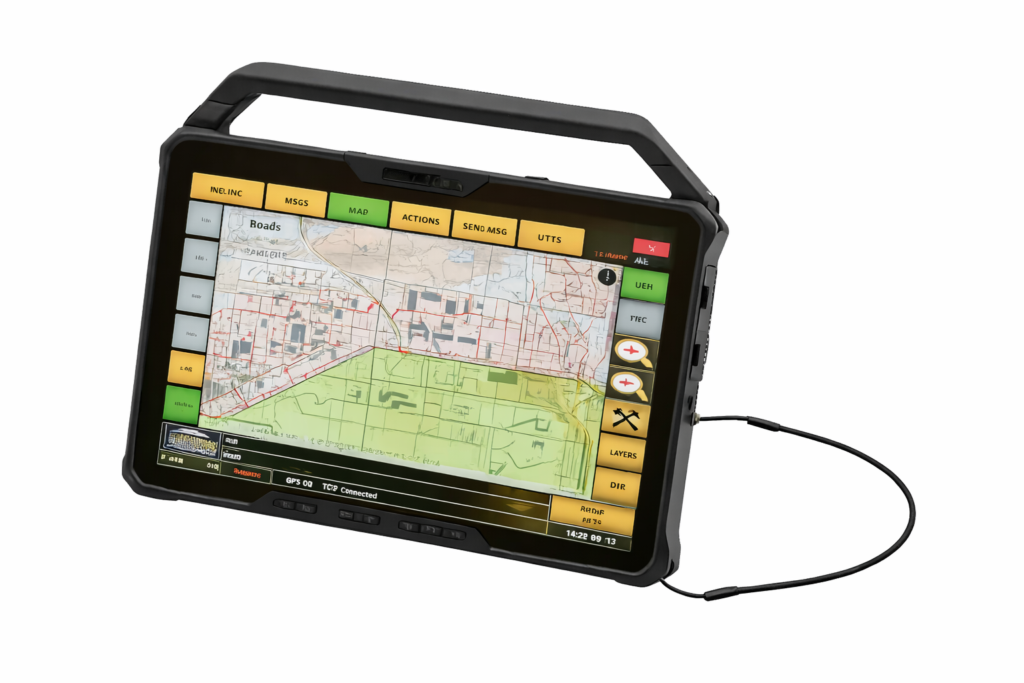
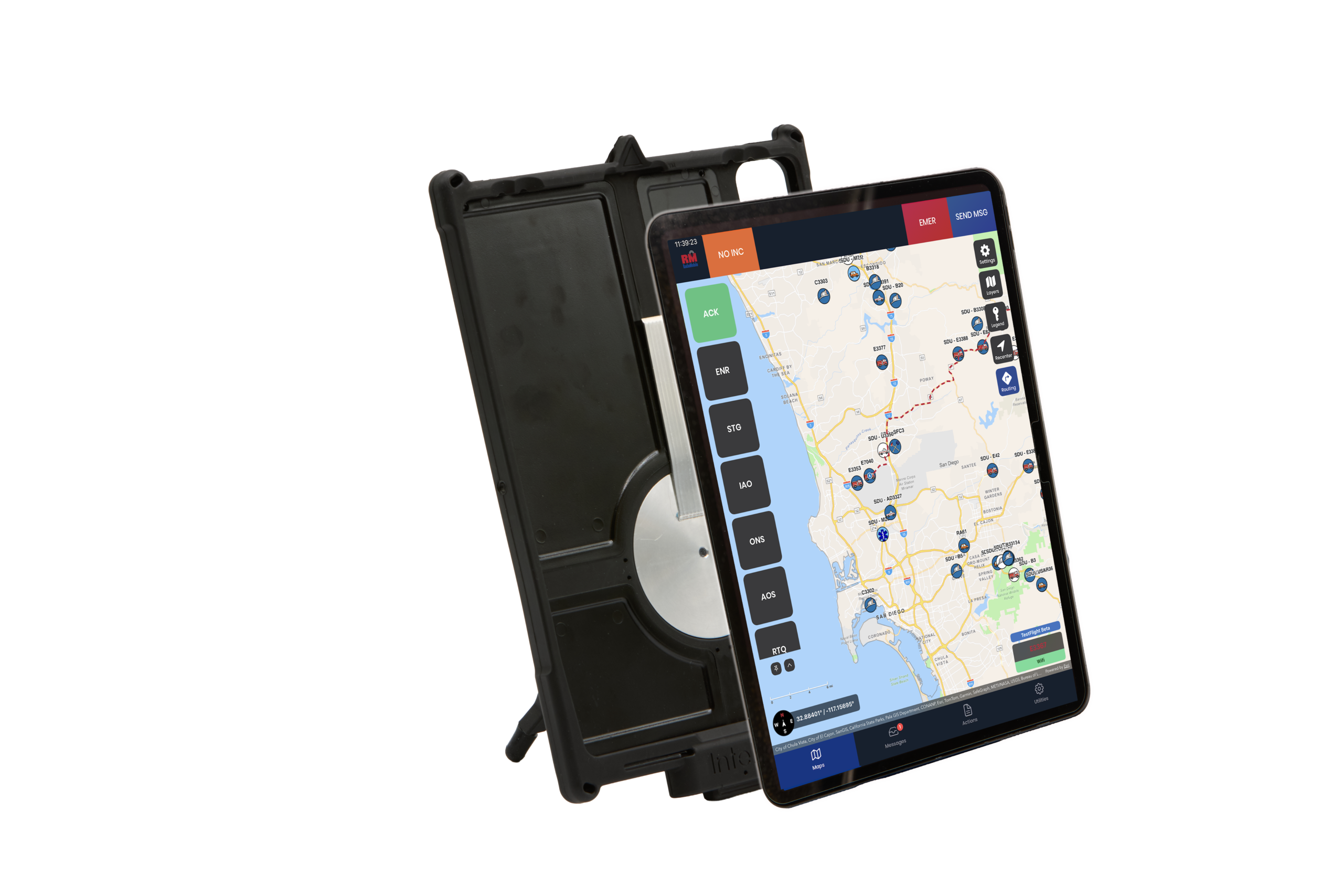
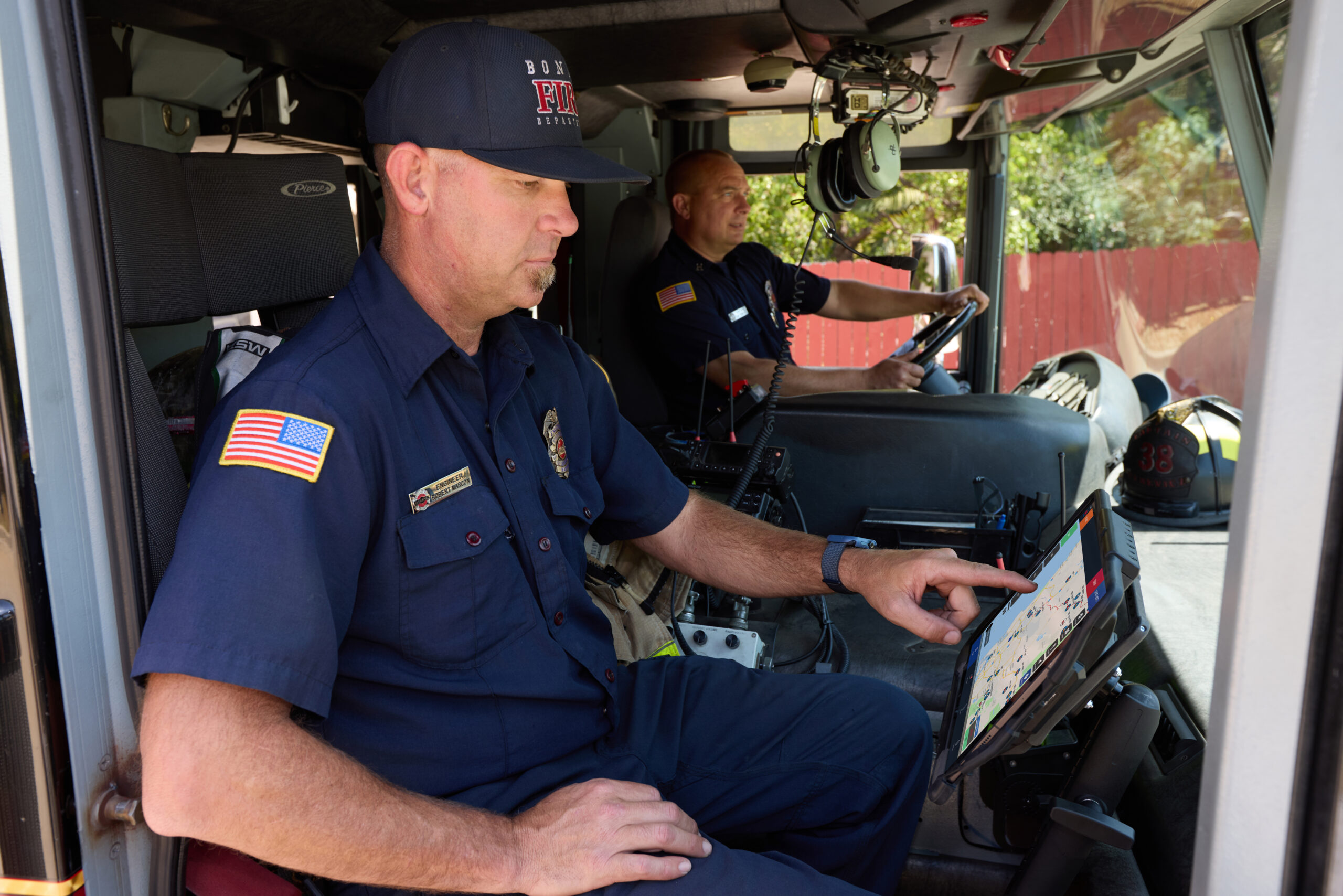
The Mobile Computing Terminal (MCT)—whether an iPad or rugged Mobile Data Computer—serves as the in‑vehicle interface for the IQ AVL solution. It displays live unit locations, incident data, and CAD messages, connecting field crews directly to dispatch through IQ AVL’s multi‑network link. This integration ensures real‑time visibility and communication continuity, even in challenging operational environments.
VIEW FEATURES
- In‑Vehicle Interface: Provides real‑time access to IQ AVL data, including unit locations, incident details, and CAD messages.
- Multi‑Network Connectivity: Maintains continuous communication through aggregated LTE, Wi‑Fi, and Ethernet links for redundancy.
- Rugged Design: Built for field durability with shock‑resistant casing, glove‑friendly touchscreen, and weatherproof ports.
- Device Flexibility: Operates seamlessly on both rugged MDCs and commercial tablets (e.g., iPad) with identical software experience.
- Integrated Messaging: Enables secure text and status updates between dispatch and field units.
- GPS Synchronization: Ensures precise positional tracking and automatic status updates.
- User‑Friendly Interface: Large, intuitive buttons and map overlays optimized for rapid situational awareness.
- System Health Indicators: Displays live connectivity, GPS, and network status for operational assurance.
- Expandable Utilities: Supports add‑on modules for vehicle telemetry, incident forms, and multimedia attachments.
- Secure Architecture: Encrypted data transmission and user authentication aligned with public safety standards.
IQ Dock: MCT Mount for iPads
IQ Dock strengthens the IQ AVL solution by keeping in‑vehicle iPads and MDCs thermally protected, ensuring they stay online and responsive during long shifts and high‑heat operations. By actively managing device temperature and preventing shutdowns, it preserves the reliability of the IQ AVL connectivity layer. This means crews maintain continuous access to maps, CAD data, and messaging—even in extreme environments.
VIEW FEATURES
- Intelligent Two‑Stage Cooling: Combines passive heat‑pipe dissipation with active fan cooling to prevent thermal throttling and shutdowns.
- Mission‑Critical Reliability: Keeps iPads and MDCs operational during long shifts, high‑heat environments, and direct sun exposure.
- Rugged, Field‑Ready Design: Built to withstand vibration, dust, and continuous in‑vehicle use.
- Optimized for Public Safety Use: Supports iPads used in fire, EMS, and law enforcement fleets.
- Automatic Thermal Management: Actively monitors device temperature and engages cooling only when needed to conserve power.
- Seamless IQ‑AVL Integration: Ensures the mobile device stays online so mapping, CAD, and messaging remain uninterrupted.
- Quiet, Efficient Operation: Engineered for low‑noise airflow suitable for enclosed vehicle cabins.
- Easy Installation & Serviceability: Designed for quick mounting, cable routing, and field maintenance.
AVL Connectivity Platform
The AVL Connectivity Platform acts as the vehicle‑side communication layer within the IQ AVL ecosystem, enabling software to execute automatic status changes, sensor inputs, and workflow triggers without requiring crew interaction. This automation reduces workload on crews and ensures more accurate, timely unit status and situational awareness.
VIEW FEATURES
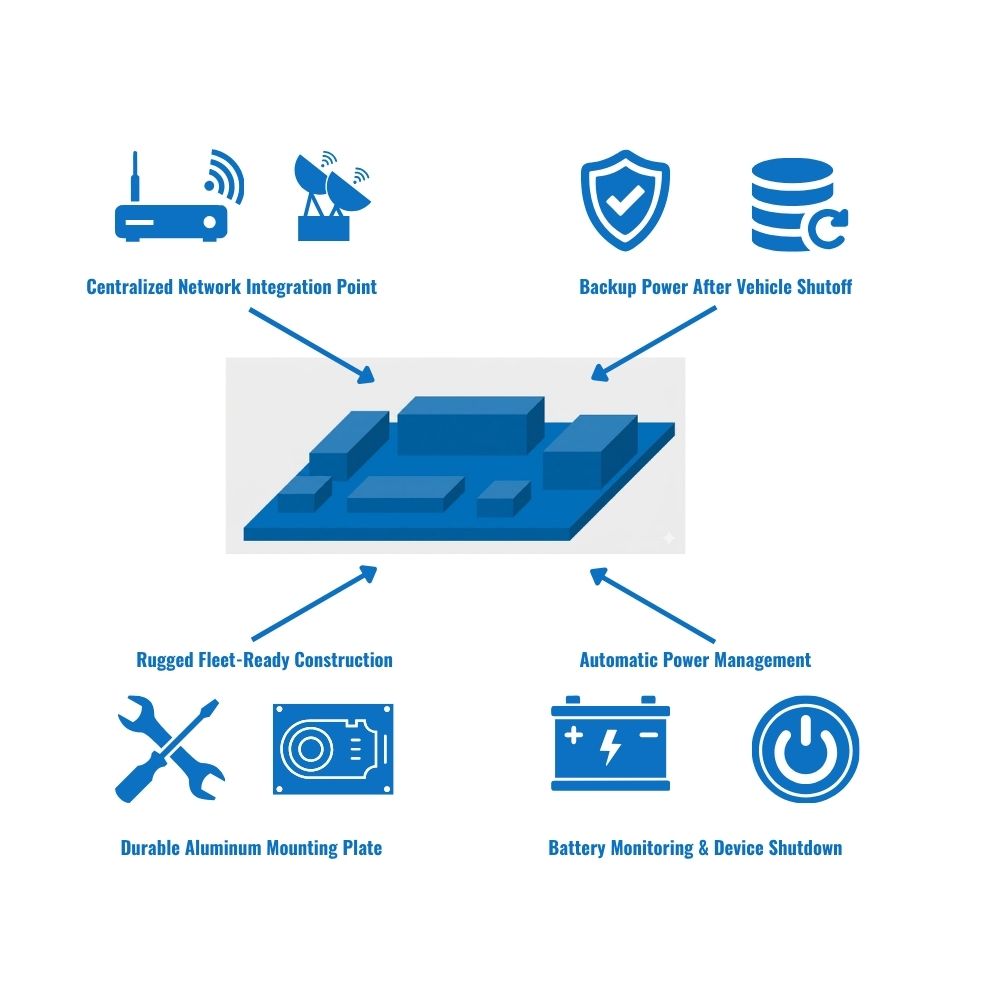
- Mission‑Critical Reliability — Provides critical devices with a stable power source that continues after the vehicle is shut off.
- Rugged, Fleet‑Ready Construction — Aluminum mounting plate for centralized power distribution and ease of installation across a variety of fleet vehicles.
- Automatic Power Management — Provides device power after vehicle is switched off, monitoring battery levels and shutting down connected devices conserving the vehicle’s battery for startup.
- Optimized for Public Safety Devices — Supports iPads and MDCs with variable mounting options.
- Seamless IQ‑AVL Integration — Ensures the MCT stays online so mapping, CAD, and messaging remain uninterrupted.
- Clean Cable Routing — Designed for secure, organized power and data connections.
- Fast Installation & Serviceability — Quick‑mount design with a field‑replaceable fan module.
Seamless Integration
IQ AVL supports interoperability with RadioMobile’s IQ FSAS, providing real time tracking to station alerting so supervisors and responders always know the exact location and status of every apparatus and crew member in motion.

Frequently Asked Questions
How does IQ AVL improve response times for fire departments?
IQ AVL improves response times by giving chiefs and command staff a real‑time, authoritative picture of where every unit is, what they’re doing, and how quickly they can reach an incident. Instead of relying on radio updates, manual status changes, or outdated GPS feeds, the system continuously updates unit locations and availability with high accuracy. This eliminates the lag that often leads to suboptimal dispatching or delayed decision-making. Chiefs gain confidence that the best available unit dispatch is consistently applied, even during high‑tempo operations or simultaneous incidents.
Beyond simple location tracking, IQ AVL enhances the entire response chain. Automated timestamps reduce the burden on crews and dispatchers, ensuring that turnout, enroute, and on‑scene times are captured accurately without manual intervention. Routing intelligence helps crews avoid congestion, closures, or terrain challenges that would otherwise slow response. Over time, these improvements compound into measurable reductions in turnout and travel times, which chiefs can present to city leadership, accreditation bodies, and the community as evidence of operational excellence.
IQ AVL also strengthens accountability and performance monitoring. Chiefs can analyze trends across shifts, stations, and battalions to identify bottlenecks or training opportunities. This data driven approach supports continuous improvement and helps agencies align with NFPA standards and accreditation requirements. Ultimately, IQ AVL transforms response time management from a reactive process into a proactive, measurable, and strategically guided capability.
How does IQ AVL improve “best available” unit dispatch accuracy?
IQ AVL improves “best available” unit dispatch accuracy by giving dispatchers real-time, high-precision data on unit location, availability, and routing conditions. It helps ensure the right unit is selected based on current operating conditions, recognizing that the closest unit is not always the best unit to send.
The platform also accounts for real-world variables that affect travel time, such as traffic congestion, road closures, and terrain challenges. By incorporating these factors into routing calculations, IQ AVL ensures that the recommended unit is not only geographically closest but also operationally fastest. This is especially important in jurisdictions with complex roadway networks, seasonal traffic patterns, or mixed urban‑rural environments where distance alone is not a reliable indicator of response time.
For ECC supervisors, improved best available unit accuracy translates into better overall performance metrics and stronger public trust. When the right unit is dispatched the first time, response times improve, resource allocation becomes more efficient, and operational consistency increases across shifts and battalions. Over time, these improvements contribute to a more resilient and effective emergency communications system.
Does IQ AVL integrate with ECC dispatch consoles?
Yes. IQ AVL integrates directly with ECC dispatch consoles in a way that enhances dispatcher workflows rather than complicating them. The system works seamlessly alongside CAD, providing reliable, real-time visibility during both high-volume call periods and routine operations.
The integration also strengthens the accuracy and reliability of dispatch decisions. Because IQ AVL continuously updates unit locations and availability, dispatchers can trust that the information they see reflects real-world conditions. This is especially important during simultaneous incidents, mutual‑aid responses, or rapidly evolving events where outdated information can lead to delays or misallocated resources. By providing a unified, real‑time view of the fleet, IQ AVL helps dispatchers maintain situational awareness and make faster, more confident decisions.
From a technical standpoint, integration is built on secure, standards‑based interfaces that minimize maintenance and reduce the burden on IT teams. ECC supervisors benefit from a system that is stable, predictable, and easy to support. Over time, this integration contributes to improved response performance, reduced dispatcher workload, and a more resilient emergency communications environment
How does IQ AVL reduce dispatcher workload?
IQ AVL reduces dispatcher workload by automating many of the repetitive, time‑consuming tasks that traditionally fall on ECC staff. Instead of manually updating unit statuses, verifying locations, or entering timestamps, dispatchers can rely on IQ AVL to handle these functions automatically. This reduces radio traffic, minimizes the risk of human error, and frees dispatchers to focus on call triage, incident prioritization, and coordination with field units. During peak call periods or major incidents, this automation becomes especially valuable, helping dispatchers maintain clarity and control in high stress environments.
Automated status changes keep CAD aligned with each unit’s actual readiness, while real-time location updates eliminate repeated location checks. This reduces cognitive load and helps dispatchers maintain situational awareness without constantly managing manual updates. Over time, these efficiencies contribute to a calmer, more predictable ECC environment where dispatchers can perform at their best.
In addition to operational benefits, IQ AVL supports dispatcher wellness by reducing the mental strain associated with high‑volume, high‑pressure work. When routine tasks are automated and information is reliable, dispatchers experience fewer moments of uncertainty or overload. This leads to better decision making, improved job satisfaction, and a more sustainable work environment for ECC personnel.
Does IQ AVL work in low signal, rural, or remote areas?
Yes. IQ AVL is engineered specifically to maintain operational continuity in low signal, rural, and remote environments where traditional connectivity often fails. Communications Technicians know that fire apparatus routinely operate in canyons, heavy canopy, mountainous terrain, and fringe‑coverage zones where cellular networks degrade or disappear entirely. IQ AVL addresses this reality by supporting hybrid connectivity — including cellular, satellite, and Wi‑Fi — and intelligently switching between them as conditions change. This ensures that units remain visible to command and dispatch even when primary networks are unavailable.
When connectivity drops below a usable threshold, IQ AVL enters an offline continuity mode that preserves critical functionality. Crews can still view maps, navigate, and record breadcrumb trails without interruption. Once the connection is restored, the system automatically synchronizes stored data with the cloud, ensuring that command staff receive a complete and accurate picture of unit movement. This is especially valuable during wildland deployments, extended rural incidents, or mutual‑aid responses where coverage varies dramatically across the operational area.
For Communications Technicians, this resilience reduces the burden of troubleshooting connectivity issues in the field. Instead of relying on workarounds or manual reporting, the system is designed to handle real-world network variability gracefully. This leads to more reliable situational awareness for command, fewer blind spots during critical operations, and a more dependable communications environment overall. IQ AVL’s ability to function in challenging terrain is a major advantage for agencies that operate outside dense urban coverage zones.
How does IQ AVL support “best available” unit dispatch and dynamic routing?
IQ AVL strengthens “best available” unit dispatch by continuously evaluating real‑time unit locations, availability, and travel conditions, ensuring that the fastest appropriate resource is always identified. Instead of relying on periodic GPS updates or manual radio confirmations, the system streams high‑accuracy location data that reflects the true position and readiness of each apparatus. This eliminates the guesswork that often leads to suboptimal dispatch decisions, especially during high‑tempo operations or when multiple incidents occur simultaneously. For Operations Chiefs, this means dispatch recommendations are grounded in real‑world conditions rather than outdated assumptions.
Dynamic routing is another major advantage. IQ AVL incorporates live traffic conditions, road closures, terrain challenges, and historical travel patterns to guide units along the most efficient path. This is especially valuable in dense urban areas, regions with seasonal congestion, or jurisdictions with complex roadway networks. Crews receive updated routing automatically as conditions change, reducing delays and improving consistency across shifts and battalions. Over time, these routing efficiencies translate into measurable improvements in response performance and operational predictability.
For multi-company responses, IQ AVL provides a unified view of how units are converging on an incident. Operations Chiefs can see which companies are arriving first, which are delayed, and whether additional resources should be reassigned or repositioned. This level of visibility supports more informed tactical decisions and enhances coordination during structure fires, medical surges, and large‑scale events. Ultimately, IQ AVL transforms best available unit dispatch from a static process into a dynamic, data‑driven capability that improves both speed and operational effectiveness.
Can IQ AVL integrate with our existing CAD software?
Yes. IQ AVL is designed from the ground up to integrate cleanly with modern CAD systems using secure, standards‑based interfaces. For IT Directors, this means the platform doesn’t require disruptive changes to your existing CAD environment or force you into proprietary middleware. Instead, IQ AVL connects through well‑documented APIs that support bi‑directional data exchange, ensuring that unit statuses, timestamps, and incident information remain synchronized across both systems. This eliminates the inconsistencies that often arise when AVL and CAD operate in silos, and it ensures that dispatchers, field crews, and command staff are all working from the same authoritative data.
The integration is engineered to be stable and low maintenance. Because IQ AVL is cloud‑native, updates and enhancements are delivered seamlessly without requiring downtime or manual intervention from your IT team. The system is also designed to be resilient, with built‑in safeguards that maintain data continuity even if connectivity fluctuates. This is especially important for agencies that operate in mixed urban‑rural environments or rely on multiple network providers. IT Directors can trust that the integration will remain reliable under real‑world conditions, including high‑volume call periods and large‑scale incidents.
From a security standpoint, IQ AVL adheres to public safety cybersecurity standards, ensuring that data exchanged between CAD and AVL is encrypted, authenticated, and protected from unauthorized access. This reduces risk and simplifies compliance with internal IT policies and external regulatory requirements. Ultimately, IQ AVL enhances your CAD system rather than complicating it, giving your agency a modern, interoperable foundation for dispatch and field operations.
Does IQ AVL integrate with fire station alerting systems?
Yes. IQ AVL integrates with fire station alerting systems to create a seamless flow of information from dispatch to the station floor. When a call is initiated, IQ AVL can synchronize unit status, turnout timing, and dispatch notifications with the fire station alerting platform. This ensures that crews receive consistent, real‑time information regardless of whether they’re viewing it on a station monitor, mobile device, or in‑vehicle tablet. The integration reduces confusion, eliminates redundant steps, and helps crews mobilize more quickly and efficiently.
For chiefs, this integration strengthens operational consistency across the department. Turnout times become more predictable, and the risk of missed or delayed notifications is significantly reduced. The system also supports automated timestamping, which improves the accuracy of response time reporting and reduces the administrative burden on crews and dispatchers. These improvements contribute directly to better performance metrics and stronger compliance with NFPA and accreditation standards.
In multi-station or multi-battalion environments, the integration adds even more value. Chiefs gain a unified view of how quickly each station is mobilizing, where delays may be occurring, and how station alerting performance correlates with overall response times. This level of insight supports targeted training, resource allocation, and operational planning, helping chiefs continuously improve service delivery.