
Integrated Emergency Response Systems: How Modern Station Alerting Connects the Chain
When an emergency breaks, the first battle is against time. Seconds disappear while information moves from caller to dispatcher, from screen to station, from station to street. The only way to win those seconds—consistently, calmly, and safely—is to connect the entire chain. That’s the promise of a fully integrated emergency response system: a tight weave of dispatch, station alerting, mobile data, and facility automation that turns a call for help into a precise plan of action.
In this article, we unpack how fire station alerting fits into that integrated whole—how tones, voice, visual cues, and automation pair with CAD and resource management to speed turnout, protect crews, and build public trust. The goal isn’t louder alarms; it’s smarter signals that reach the right people, in the right way, at the right moment.
Why Integration Matters (More Than Ever)
Legacy alerting could wake a building. Modern alerting should guide a response. Integration makes the difference:
- Speed with context: Alerts aren’t just “go”—they include incident type, location, hazards, and assignment.
- Precision over noise: Only assigned personnel are alerted; everyone else keeps resting, training, or working.
- Automation in sync: Bay doors and lighting activate alongside alerts, reducing manual steps.
- Redundancy by design: Multiple paths (radio/IP/cellular) ensure the message always lands.
- Data you can use: Turnout times, acknowledgment rates, and system health are visible and actionable.
An integrated setup turns a linear process into a closed loop—information flows out, action occurs, confirmation returns, and leadership can improve the system with every run.
The Station Alerting Layer: Where Plans Become Motion
Think of station alerting as the translator between dispatch decisions and firefighter action. Done well, it converts CAD events into clear, targeted cues:
- Tones that encode urgency (routine vs. priority).
- Voice prompts that deliver the essentials: type, address, cross, hazards.
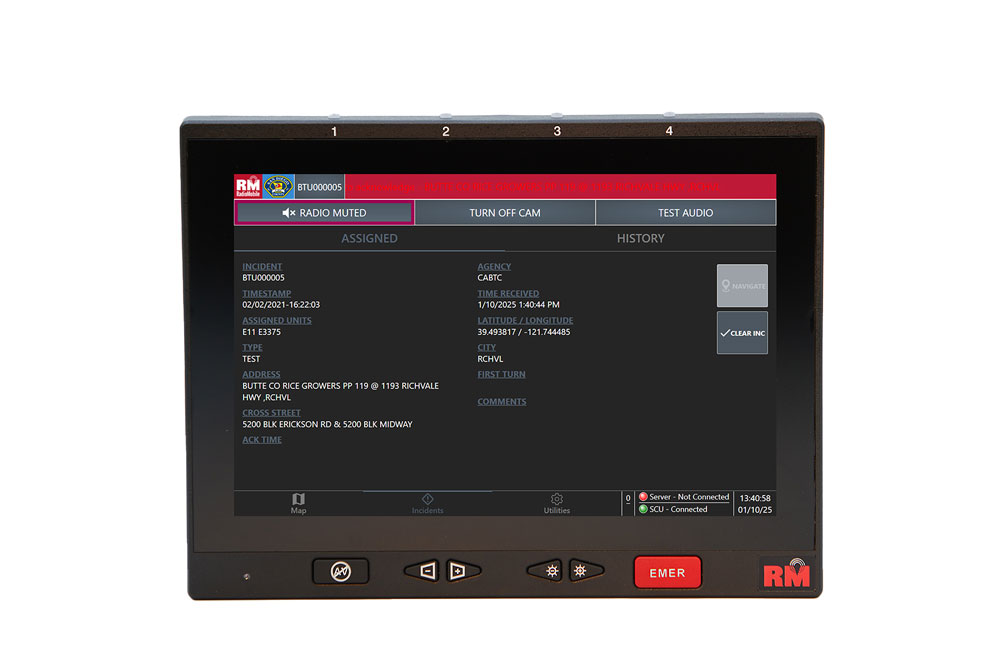
- Visuals that remove guesswork: maps, hydrants, assignments, notes.
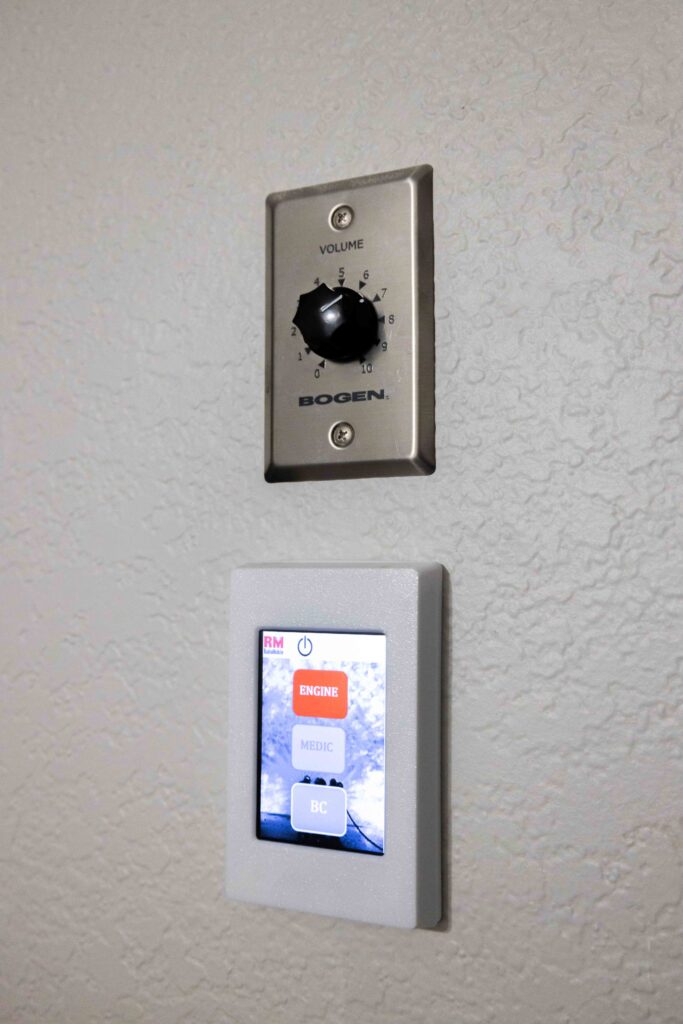
- Targeting that respects people and sleep: dorms vs. bays, assigned units vs. the whole house.
- Templates for common calls that launch consistent sequences automatically.
The result is a calmer, faster path from information to movement—fewer questions, fewer errors, tighter coordination.
Core Components of a Modern, Integrated Stack
A fully integrated environment usually includes:
CAD (Computer-Aided Dispatch)
The source of truth for incident creation, unit selection, and updates. Integration pushes incident data straight into the station controller and out to displays and MDCs—no retyping.
Station Alerting System (FSAS)
The “nerve center” in the station. It orchestrates tones, voice, visuals, zones, and automation hooks (doors/lights/ventilation), and logs everything for review.
CDT & Mobile
In-cab and handheld devices keep apparatus synced with dispatch, mapping, and hazards—all updated in real time.
Facility Automation
Lighting scenes, bay doors, ventilation, and pre-alert signals tied directly to alert templates and incident type.
Comms & Redundancy
Parallel paths (radio/IP/cellular), UPS/generator power, and automatic failover protect against single points of failure.
Analytics & Monitoring
Dashboards for turnout times, missed/late alerts, system health, and maintenance warnings—fuel for continuous improvement.
How Enhanced Alerting Improves Outcomes
Integrated alerting doesn’t just feel smoother; it performs better:
- Accelerated turnout: Fewer manual steps and immediate, targeted notifications.
- Higher accuracy: The right crews get relevant details—no guessing, no duplicated radio traffic.
- Lower fatigue: Selective nighttime alerting protects sleep and keeps crews sharp.
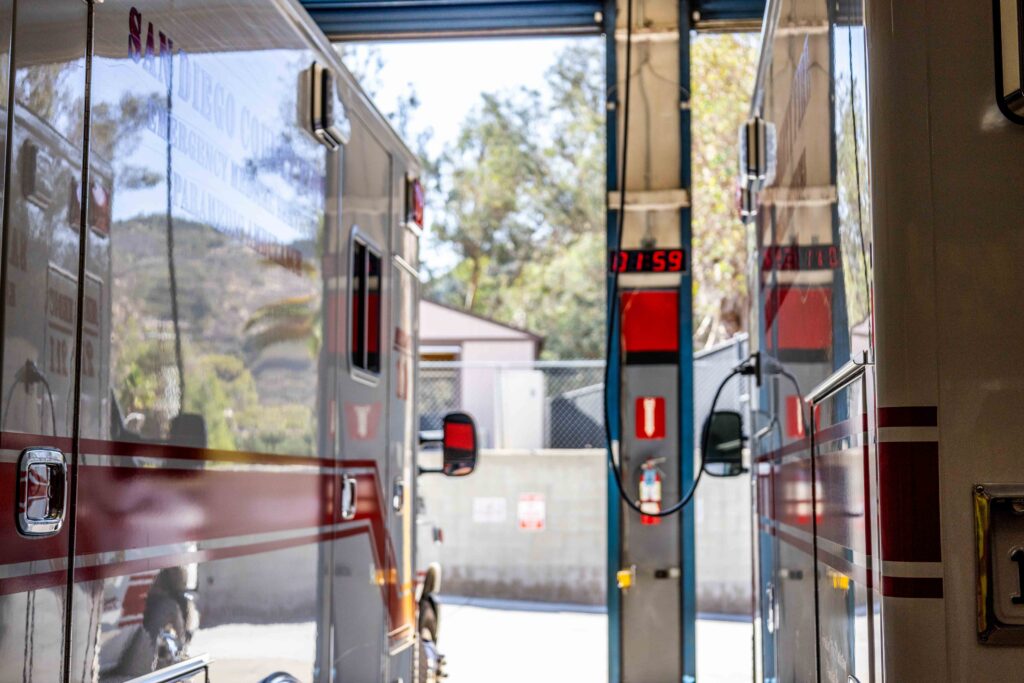
- Better safety: Automation (doors, lights, appliances) reduces risk and saves movement.
- Cleaner multi-agency ops: Shared data and standardized cues minimize confusion during mutual aid.
RadioMobile’s approach to selective alerting and CAD-linked templates illustrates this shift well—departments can map tones, voice prompts, and automation sequences to incident types so that a “working fire” alert behaves very differently from a 2 a.m. routine medical. Same platform, different behavior, less disruption, faster action.
Alarm & Detection Tech: The Trigger That Starts the Chain
In many incidents, alarms (fire alarms, monitored systems, sensors) are the earliest signals. Integrated platforms move these signals from raw inputs to coordinated outputs:
- Auto-classification routes the right template (priority tone, lights, bay doors, ventilation).
- Dynamic updates push new info (e.g., confirmed smoke showing) without re-alerting the entire house.
- Standards alignment keeps workflows consistent with NFPA guidance and local policy.
The key: alarm events are not isolated—they’re ingested, enriched, and acted on through a single alerting and dispatch fabric.
Collaboration Beyond One House (or One Agency)
Major incidents demand shared awareness. Integrated alerting supports:
- Cross-station roll-ups: escalate from local to multi-station alerts only when needed.
- Interoperability with neighboring agencies so tones, voice, and data align during mutual aid.
- Common operating picture: synchronized maps, hydrants, preplans, and hazards across units.
This isn’t just convenience—shared cues reduce delays and prevent contradictory instructions when pressure is highest.
Best Practices for Station Management & Safety
To get full value from integrated alerting, treat it as a living system:
Zoning & Tone Discipline
Separate dorms from bays; design a small, memorable tone palette. Night modes matter.
Template Everything
Build playbooks for structure fire, ALS medical, MVC w/ entrapment, hazmat assist, brush/wildland. Adjust after drills.
Automation with Guardrails
Tie doors, lights, and appliances to the right events. Log automation actions and track exceptions.
Redundancy & Testing
UPS + generator, parallel comms, weekly signal checks, monthly failover drills, quarterly end-to-end validations.
Training & Change Management
Hands-on drills with real tones, voice, and displays. Post updates clearly. Capture and act on crew feedback.
NFPA Alignment
Review workflows against standards regularly. Let audits drive small, continuous adjustments—not big, disruptive shifts.
Implementation Roadmap: Crawl → Walk → Run
- Assess: Map pain points (missed alerts, night disruption, turnout friction). Inventory zones, devices, and comms paths.
- Pilot: Start with one station or shift. Implement dorm vs. bay zoning, two tone profiles, and one or two templates.
- Measure: Track alert-to-turnout deltas, missed or late alerts, and user feedback.
- Refine: Tune volumes, scripts, and visuals; update templates post-drill.
- Scale: Add specialty zones or teams and extend to additional stations.
- Sustain: Monthly system health checks, quarterly drills, annual template refresh, and ongoing NFPA reviews.
Small, steady improvements outpace big-bang deployments every time.
Seven Metrics That Prove It’s Working
- Alert-to-turnout time (pre vs. post integration).
- Acknowledgment rates (by zone/device).
- Missed or late alerts (count and root cause).
- Overnight sleep disruption (alerts to non-assigned personnel).
- Automation success (doors, lights, appliance triggers).
- Update latency (CAD change to station display or mobile).
- Multi-agency sync quality (feedback from partners).
Measure only what you will use for decisions; then actually use it.
Common Pitfalls (and How to Avoid Them)
- Over-customization: Too many tones or templates confuse crews. Keep it simple and consistent.
- Ignoring legacy assets: Don’t rip and replace; bridge PA and sirens while you modernize.
- One-size-fits-all alerts: Night ≠ day; medical ≠ working fire. Use conditional rules.
- Weak redundancy: Single paths fail at the worst times. Build parallel routes and test them.
- No ownership: Assign a system owner to steward changes, audits, and training.
- Skipping change management: Communicate updates, post quick guides, and drill the changes.
A Day-in-the-Life: Two Alerts, Two Behaviors
02:16—Routine Medical
Dorms: soft, escalating tone; whisper-mode voice: “Medical A—Engine 2 only, 123 Maple.”
Bays: normal tone and voice; route preview on display and MDC.
Everyone else sleeps.
14:42—Working Fire
Bays and house: priority tone; lights and bay doors activate; display boards show hydrants and preplans; appliances turned off.
Mutual aid notified per template; second station receives roll-up alert.
Updates flow from CAD to displays and MDCs en route.
Same platform—two entirely different experiences tuned to the moment.
Final Thoughts
Integrated station alerting isn’t about louder alarms. It’s about turning information into action faster, calmer, and with fewer errors. When CAD, station alerting, MDCs, and facility automation are stitched together, departments save seconds, crews stay rested and informed, and communities gain a safer, more reliable response.
Providers such as RadioMobile design alerting platforms with selective notifications, CAD-driven templates, and built-in redundancy so departments can adopt integration without disrupting what already works. The outcome is a system that adapts to each call and each station—precision over noise, readiness over guesswork.
Because in the moments that matter, clarity is speed and speed saves lives.