

Fire Station Alerting Systems: From Legacy Technology to Modern IP-Based Solutions
When emergencies strike, firefighters don’t have time to wonder whether their alerting system will deliver the message. Every second counts, and the tools behind those seconds can mean the difference between a smooth, coordinated response and costly delays.
For decades, fire station alerting relied on legacy systems—hardwired tones, basic radio calls, and loudspeakers designed to wake the entire station at once.
While tone-based alerting remains widespread it is no longer the state-of-the-art. These legacy systems are audio-only, limited, and not designed for modern interoperability.
Enter the new generation of fire station alerting. Platforms like IQ FSAS by RadioMobile modernize station alerting by leveraging IP-based communications as the primary path, while maintaining radioreliable backups for redundancy. The result is faster response times, less disruption, and a system built to grow alongside a department’s needs.
From Legacy Systems to Modern Alerting: A Quick History
The evolution of alerting is a journey toward one goal: removing the friction between an emergency and a response.
Manual & Mechanical Era
Early alerting relied on bell towers and claxons. Detection was manual, and response depended on whoever happened to be listening.
The Telegraph Era
Cities introduced telegraph boxes and ticker-tape. These provided the first “connectivity” but lacked automation and were prone to human error.
The Automation Gap
Early (late 1800s) electric bells and sprinkler activated gongs provided basic automated detection, but they were standalone building devices with no routing or communication beyond the premises.
The Radio Ceiling
Radio-based alerting was a leap forward but also has its limitations. It is often audio-only, lacks data delivery, and cannot support the complexity of modern fire operations.
What Sets Modern Alerting Systems Apart
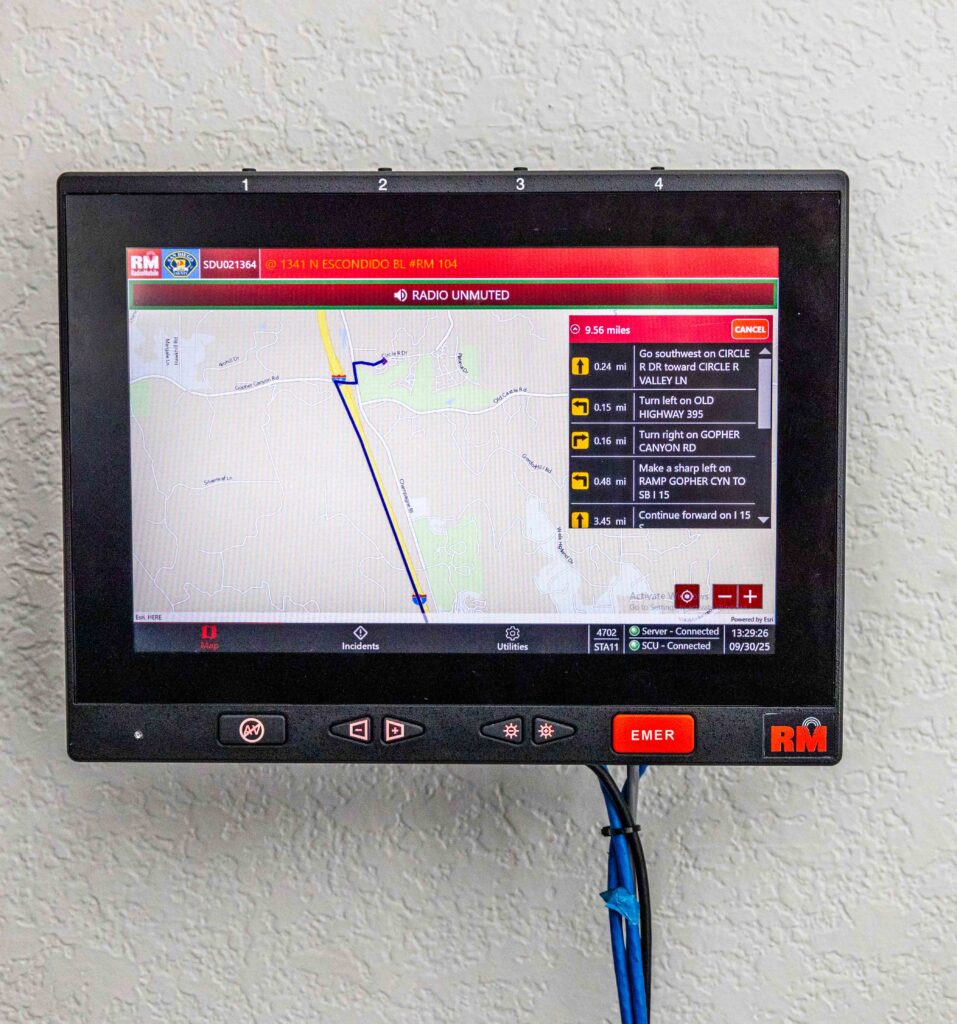
Next-generation alerting systems don’t just wake firefighters—they manage the entire chain from dispatch to delivery. While the line between automation and AI can seem blurry, the IQ FSAS delivers advanced intelligent logic that was once thought to be the future.
- Speed and Precision: Alerts reach sub-second delivery through redundant IP paths.
- Zoned Alerting: Instead of waking the whole station, modern systems target specific dorms or bays based on the unit assigned.
- CAD Integration: Details feed directly from dispatch, delivering data-rich packets.
- Automation Hooks: The system automatically controls bay doors and lighting.
- Resilience: Unlike legacy systems that rely on a single path, modern systems use IP and radio for a multipath approach.
The Advantages of IQ FSAS
The IQ FSAS platform by RadioMobile represents the cutting edge of fire station alerting. Where legacy systems stop at notification, IQ FSAS builds a connected ecosystem of communication.
Faster, Smarter Alerts
IQ FSAS ensures real-time delivery across redundant IP paths. Precision zoned alerting and progressive wake-ups reduce responder stress and alert fatigue.

Seamless CAD Integration
By linking directly with CAD, IQ FSAS transmits incident details automatically. Instead of relying on manual relay, information flows from dispatcher to firefighter in seconds, complete with unit assignments and pre-plans.
Reliability Built In
Modern systems prioritize uptime through a multipath approach—IP + radio + cellular + local fallback. Legacy systems often relied on a single radio frequency; IQ FSAS ensures the message gets through regardless of network conditions.
The Role of IP-Based Alerting
The move to IP-based systems is the most transformative shift in the industry.
- Scalability: Easily expand from a single station to county-wide deployments.
- Integration: IP allows for the unification of station systems, from lighting to gear sensors.
- Future-proofing: Designed for the data-driven reality of modern fire service.
Where RadioMobile Fits In
RadioMobile isn’t just the next step in the timeline; it is the first system designed for the modern operational reality. By moving past the limitations of legacy radio tones and embracing intelligent, IP-based automation, the IQ FSAS platform makes daily operations faster, safer, and more resilient.
Final Thoughts
The comparison between legacy alerting and the IQ FSAS comes down to this: one is built for yesterday’s challenges, the other for today’s data-driven world. Legacy technology provided a foundation, but IP-based systems now deliver the speed, precision, and integration required for modern fire service.